A smart start, and then a lot of success.
A.R.T are Anastasia, Rosetta and T‑R3X: three voices from Wellington blending R&B, island soul and Poly reggae. They've won Best Pacific Group at the Pacific Music Awards two years running, been nominated at the Aotearoa Music Awards, and passed 5 million views on YouTube.
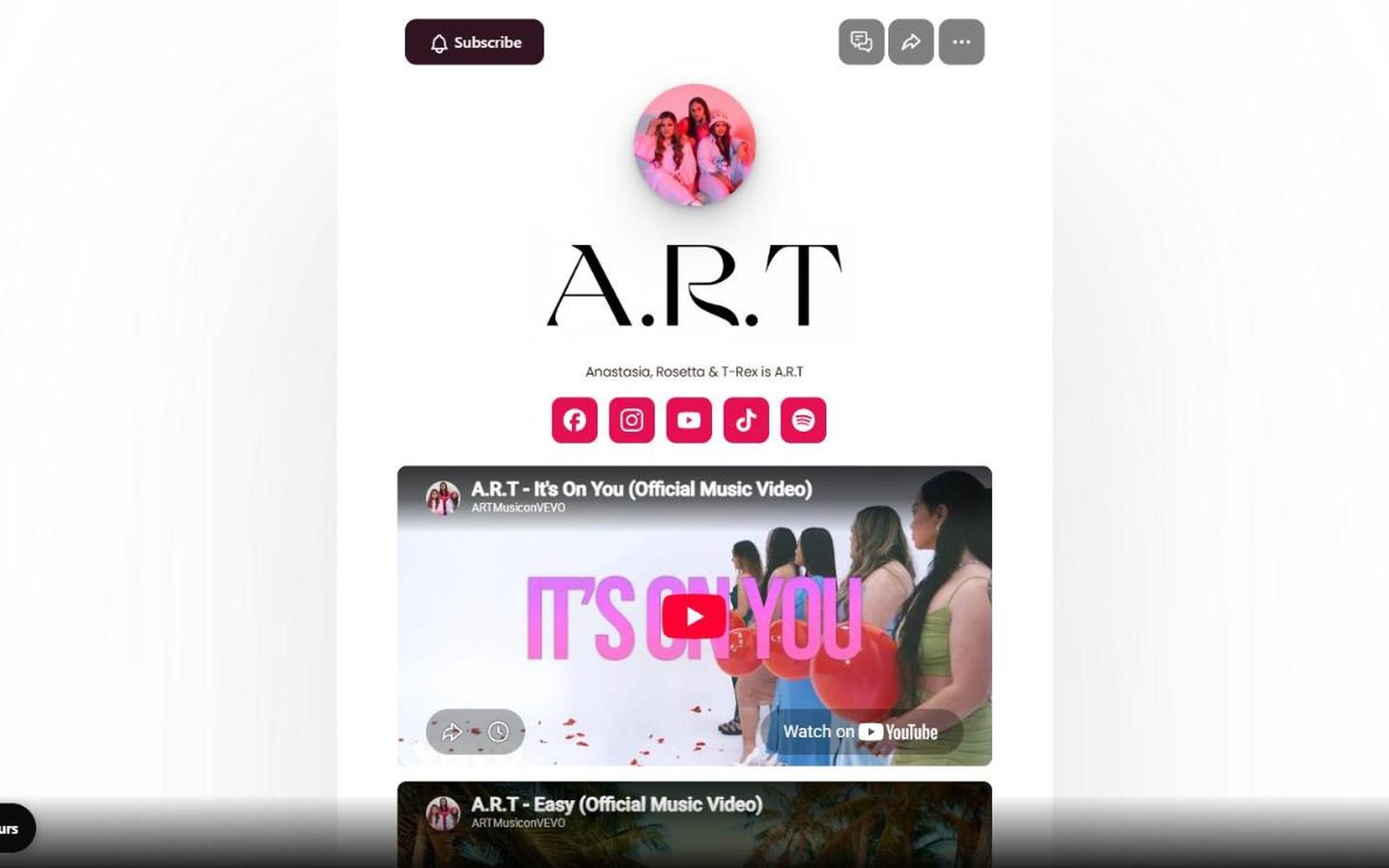
Like a lot of artists, they started with a link-in-bio page: their logo, their socials and their latest videos, all in one place. It was a smart way to start.
But as the awards, releases and bookings kept coming, they wanted more: somewhere promoters could find their rider, press could find their story, and fans could hear about the next single first. And somewhere Google and the new AI search tools could learn who they are.
Twelve new releases a year deserve a proper home.
And because they release every month, it had to keep up without anyone sitting at a keyboard every first Thursday.
What they had in mind.
- Put them front and centreThe product is the three of them. The site should open on their faces, not a logo.
- Update itselfA new single on Thursday should be on the site by Friday, without anyone touching it.
- Let the team edit itShows and news added by the band and management, with no technical accounts to manage.
- Turn gig crowds into fansSomeone who scans a code at a show should end up on a list the band owns.
- Be foundBy promoters, by press, and by the AI tools people now ask for recommendations.
Mapped out together.
- Four directions, one winner
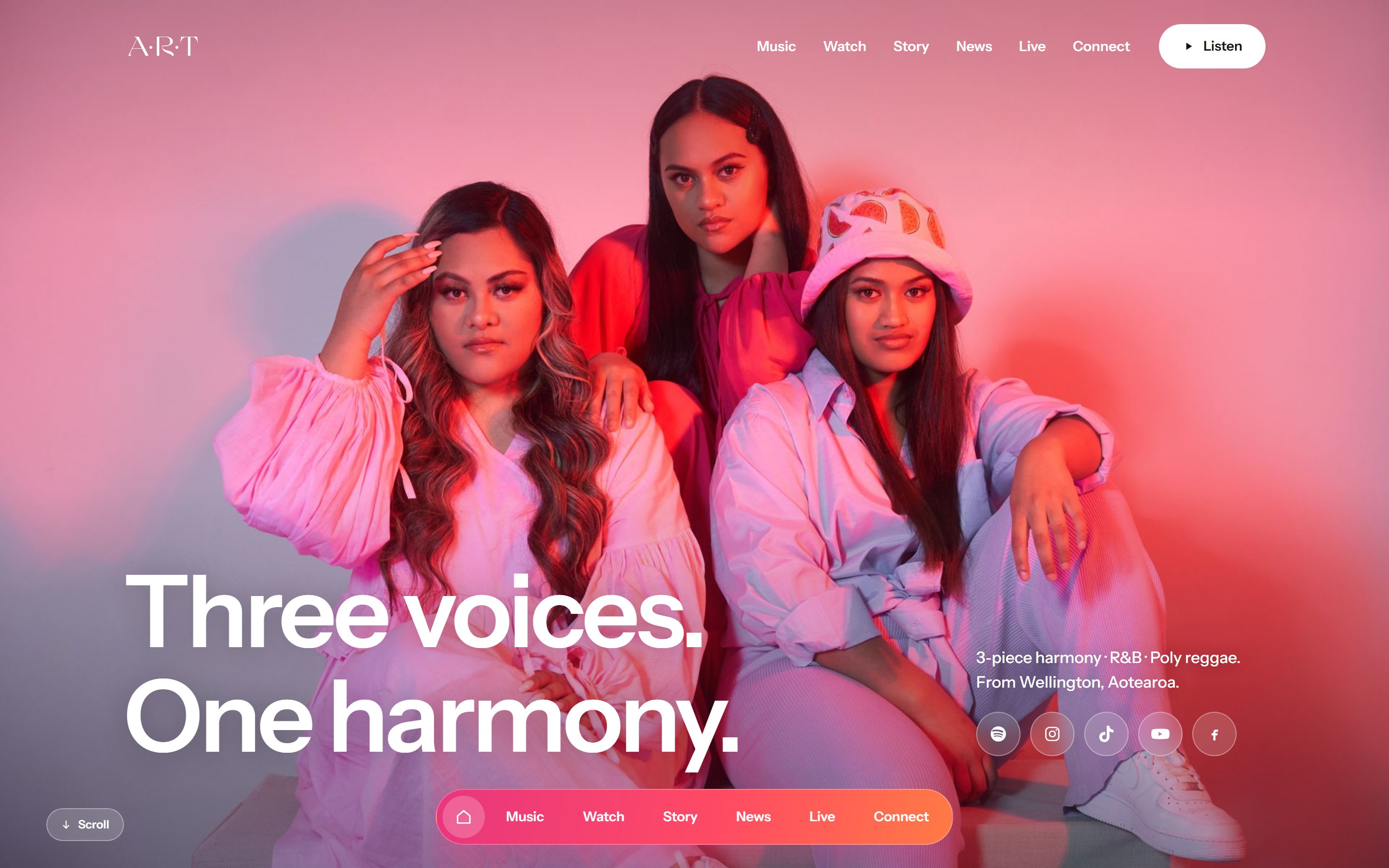
We brought four looks to the table: a dark neon one, a warm editorial one, a Swiss poster one and "Spotlight". The band chose Spotlight, which puts the three of them, in their own press photos, across the whole first screen. As they put it, the product is them.
- Let the site update itself
Every night it checks Spotify and YouTube. A new single or video appears on its own, with its cover art and links, ready for the morning.
- An editor with no tech in the way
The team wanted to update the site themselves, without signing up for technical accounts. So we built them a branded editor behind one shared password, where they add shows and news in a minute.
- Let AI do the typing, never the publishing
Upload a gig poster or paste a news link and the details fill themselves in. It always lands as a draft they check and edit before it goes live, and it runs on a free AI service, so there's nothing extra to pay.
- Built for AI search, not only Google
Shows and news are written into the page itself, so search engines and AI assistants can read them, along with the structured details that tell them who A.R.T are and what they've won.
- Then, what sits behind the website
Once the site was live, we sat down with management to talk about everything around it: fans, releases, bookings and press. That conversation became the control centre.
- Agree what to leave out
Together we decided what not to build, and wrote down why. Text alerts cost money on every message and need separate consent, when email does the same job for free. Merch payments carry risk a band doesn't need, so they link out. Pre-saves rely on approval from Spotify, so a simple "tell me when it's out" does the job instead.
A website that runs itself, and a control centre that runs the rest.
New releases, on their own
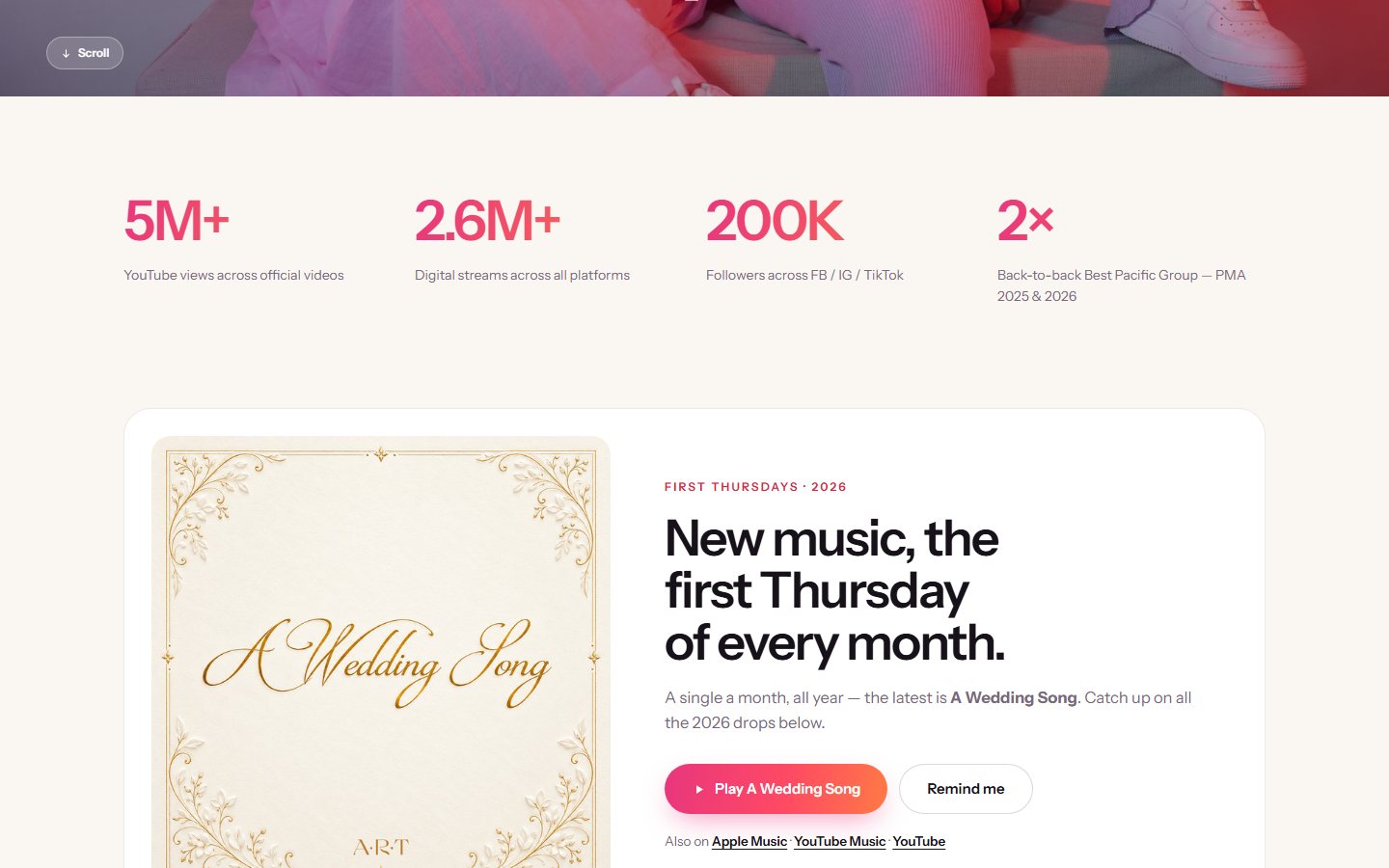
The first-Thursday single, the full catalogue with cover art, and videos that only load when you press play. A nightly check keeps all of it current.
Why: a band that releases monthly can't wait for a web developer every month.
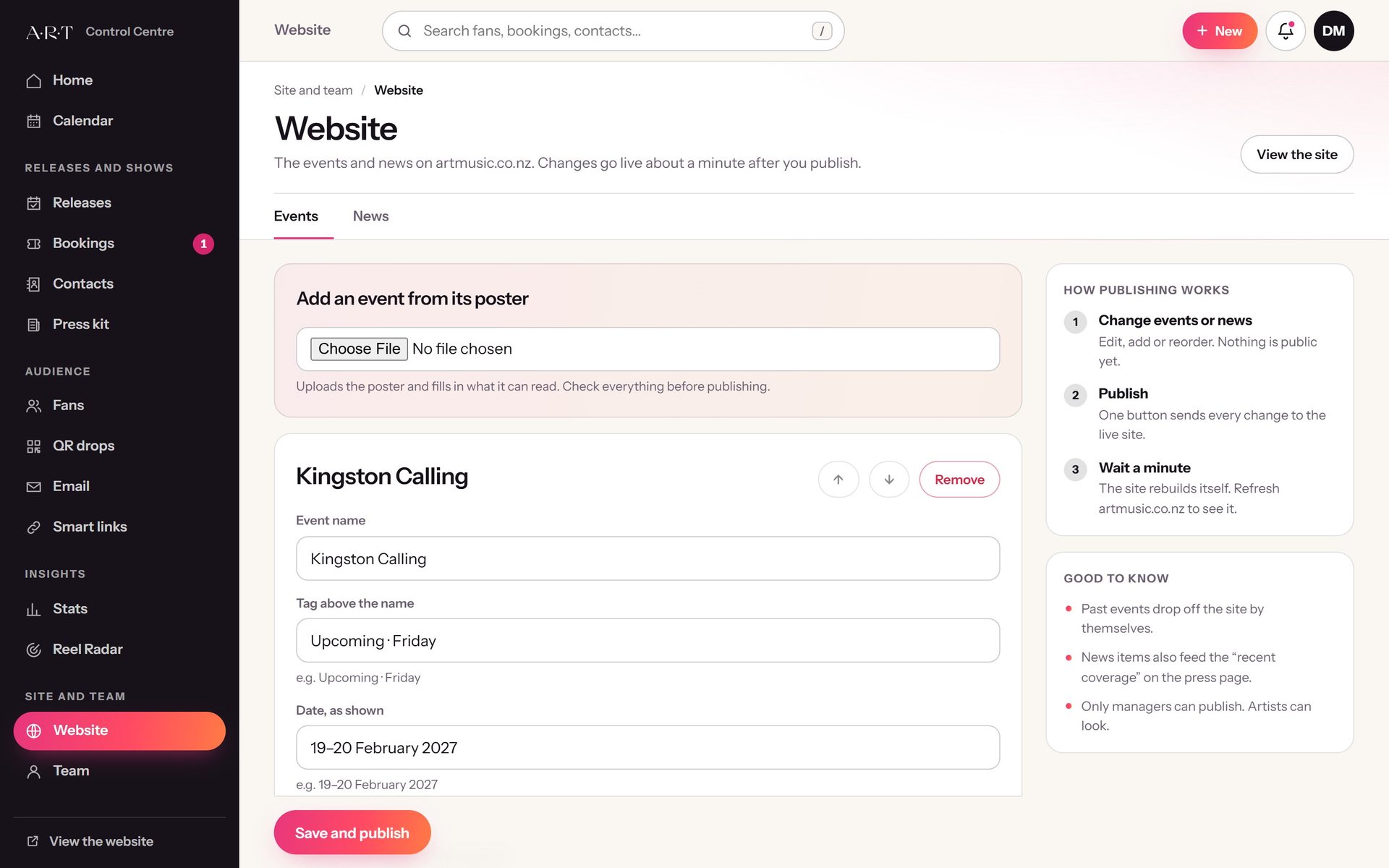
Add a show from its poster
Drop in the poster and the event name, date and venue fill themselves in. Check it, press publish, and it's on the site.
Why: the poster already has all the details. Nobody should have to type them twice.
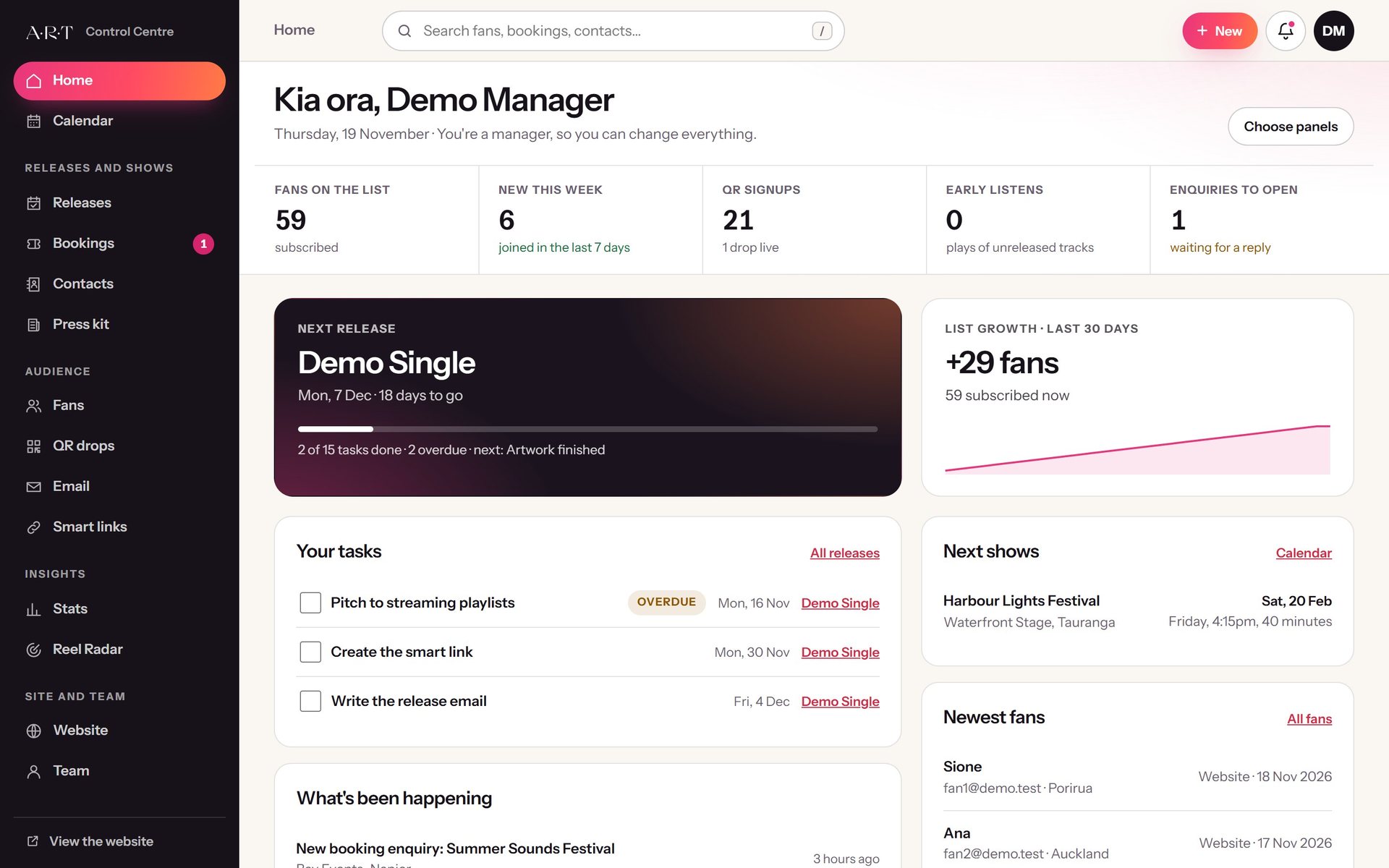
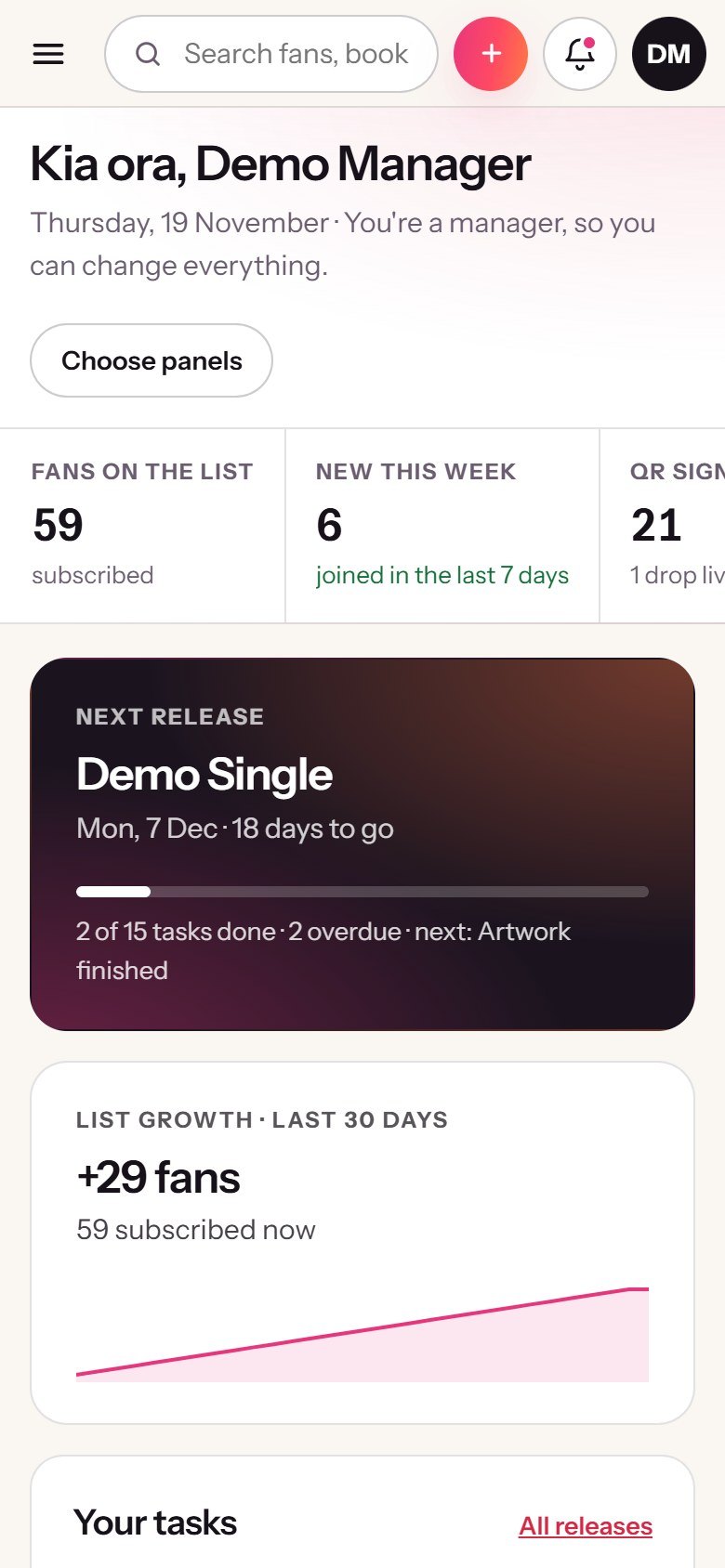
Everything in one place
Fans, releases, bookings, contacts, press and stats, on a computer or a phone. Managers can change everything; the band can see everything.
Why: when you release every month, the details scatter fast.
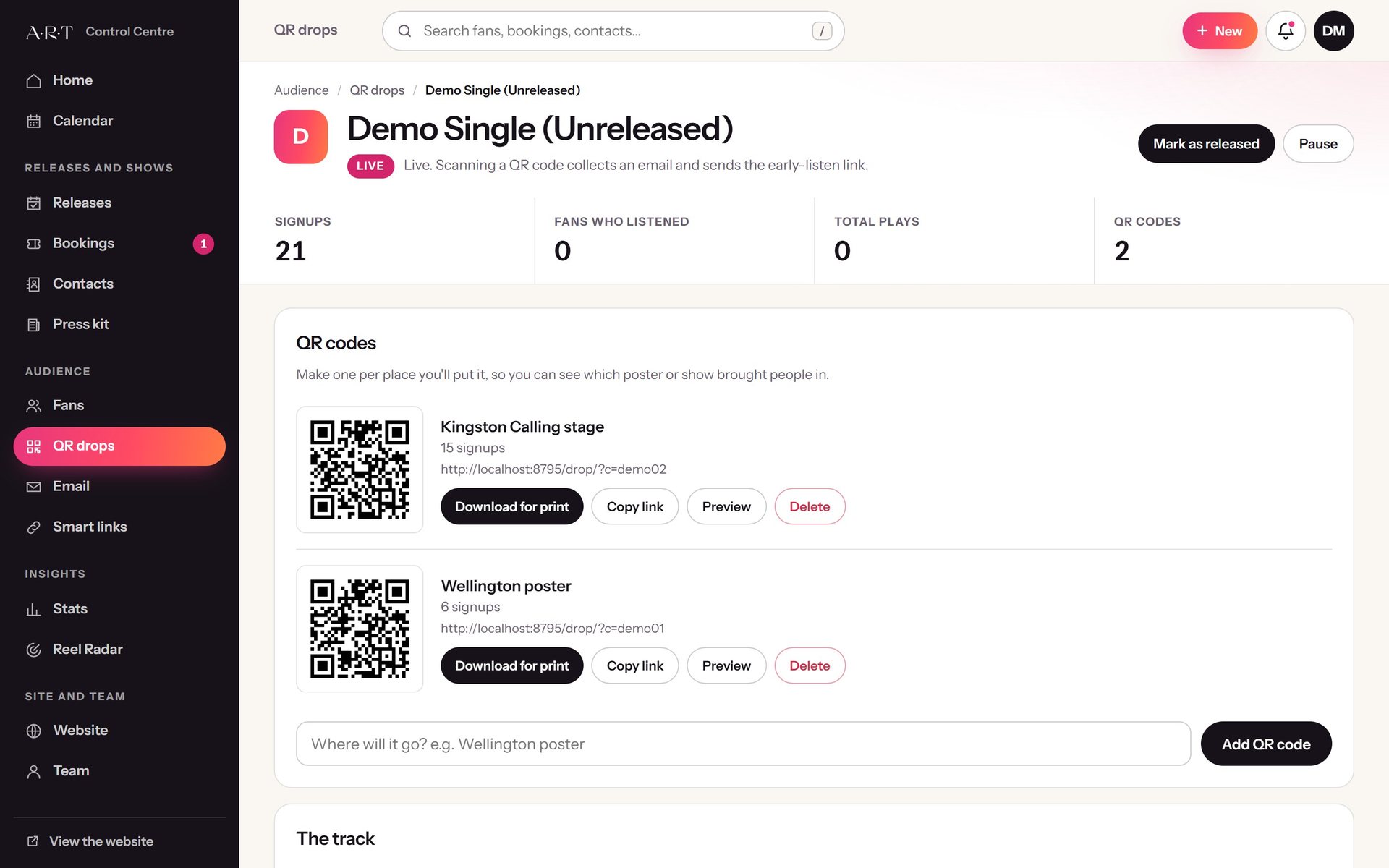
QR codes that turn crowds into fans
Put a code on screen at a show. Fans scan it, give their email, and get to hear the next single early, a few plays each, before anyone else.
Why: a room full of people who love you is the best list you'll ever build.
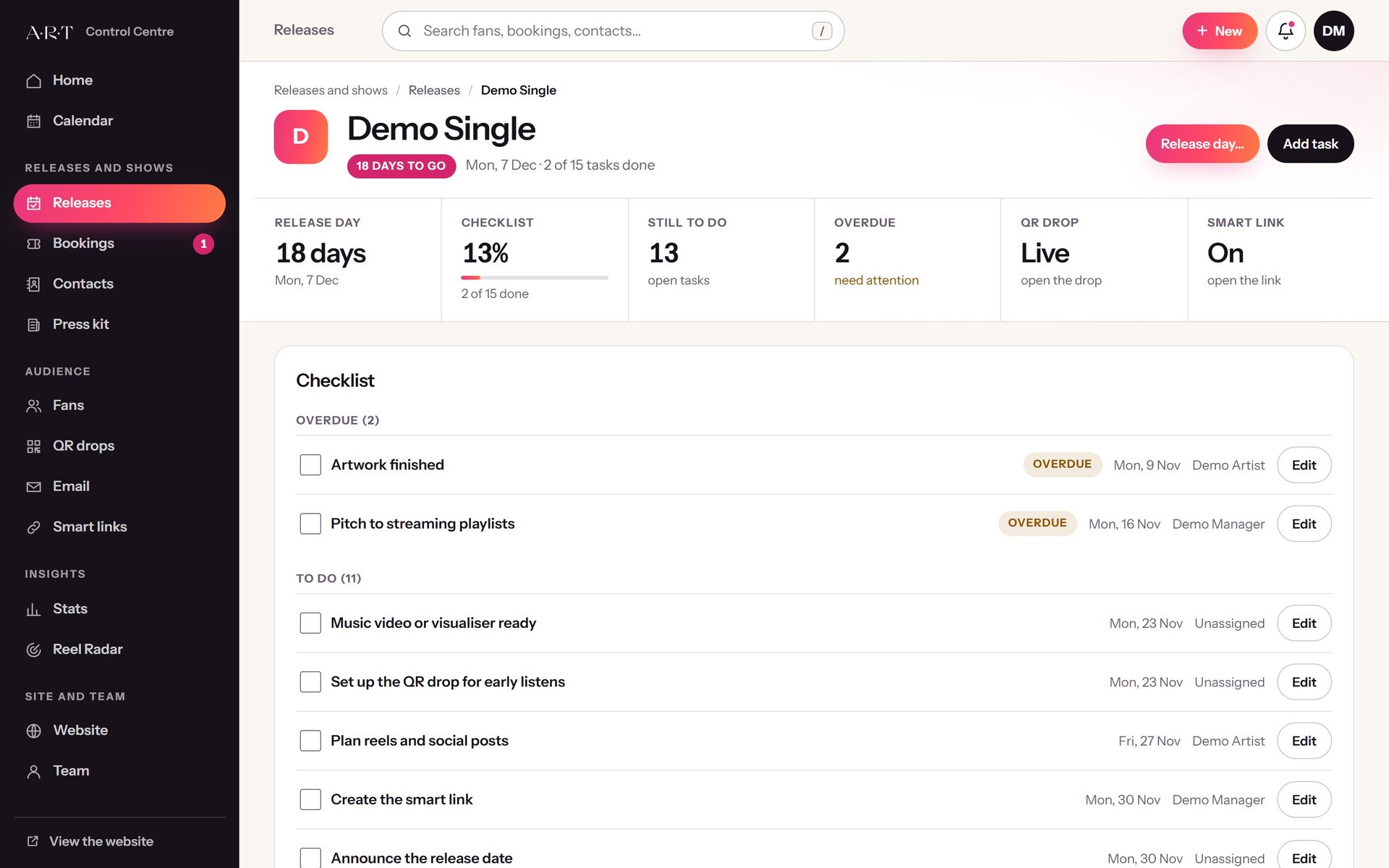
A release planner for every first Thursday
Each single gets a fifteen-step checklist with dates and owners, reminders when something's overdue, and one "release day" button that updates the links and emails the fans.
Why: twelve releases a year is a production line. It should run like one.
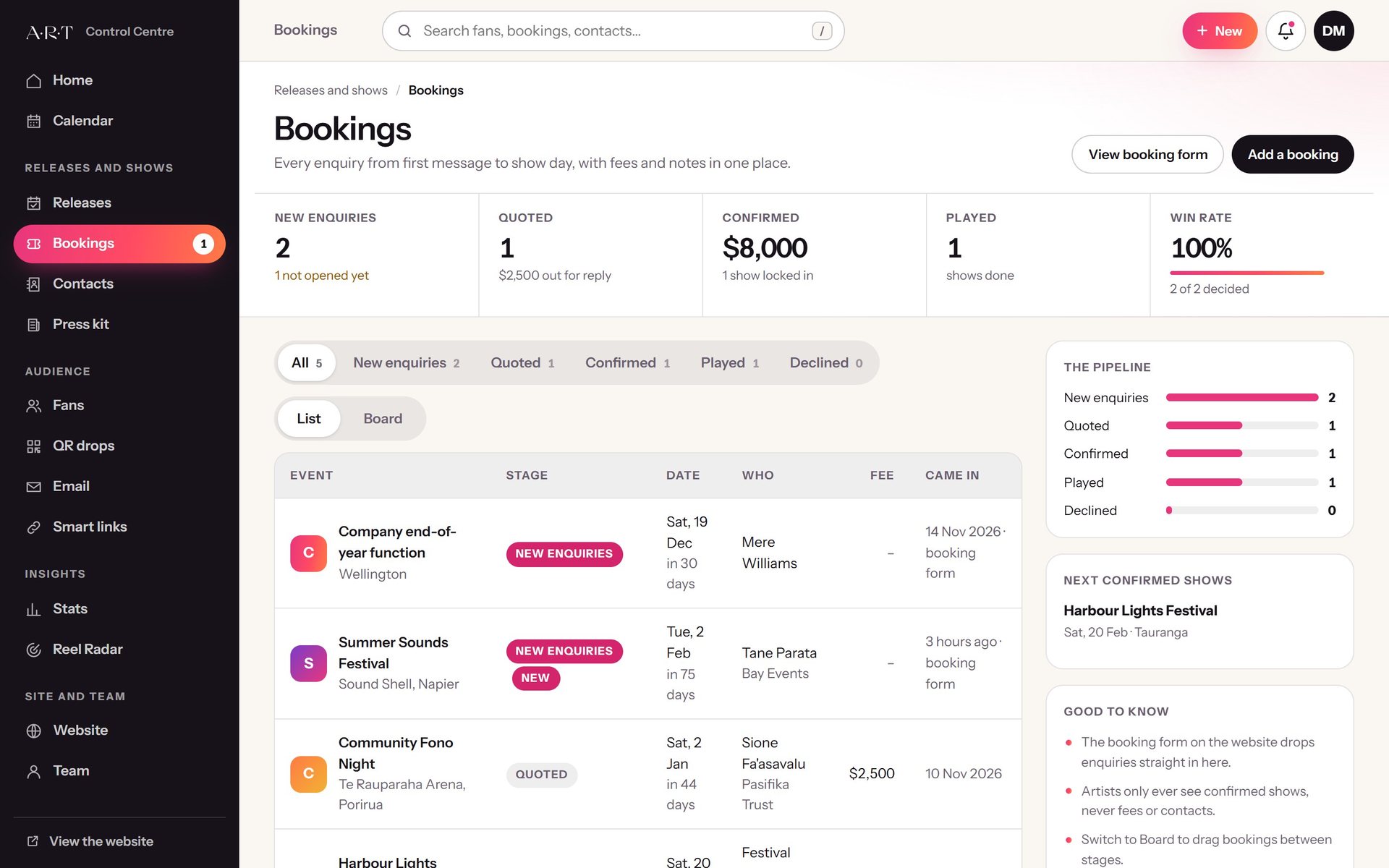
Bookings you can see at a glance
Every enquiry from the website lands on a board, from new to confirmed to played. A confirmed show goes onto the website with one press.
Why: no more digging through messages to find out who asked about which date.
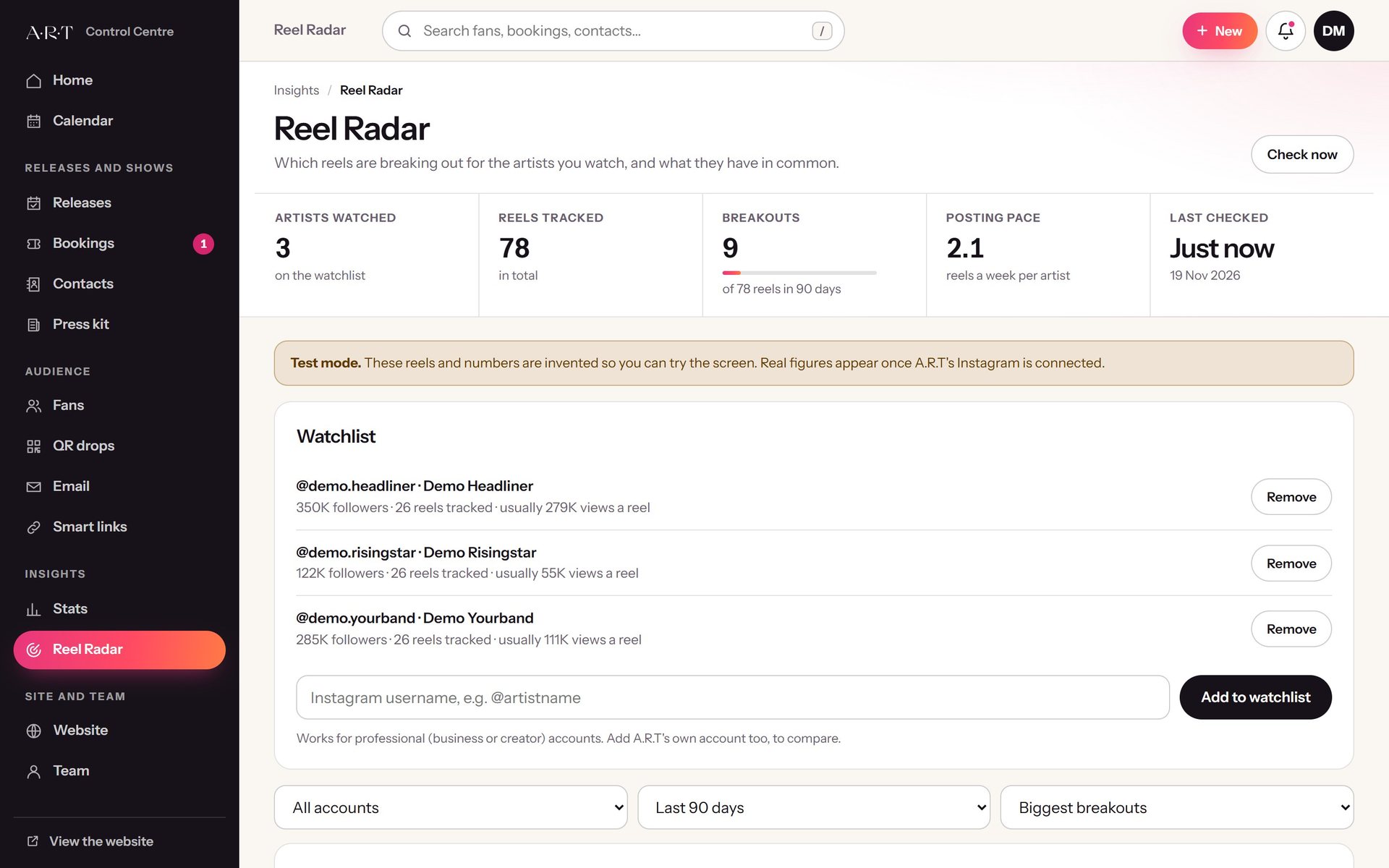
Reel Radar, the band's idea
The band wanted to see which Instagram reels were working for artists like them. Reel Radar finds the best performers and uses AI to sum up what they have in common.
Why: learning from what's already working beats guessing.
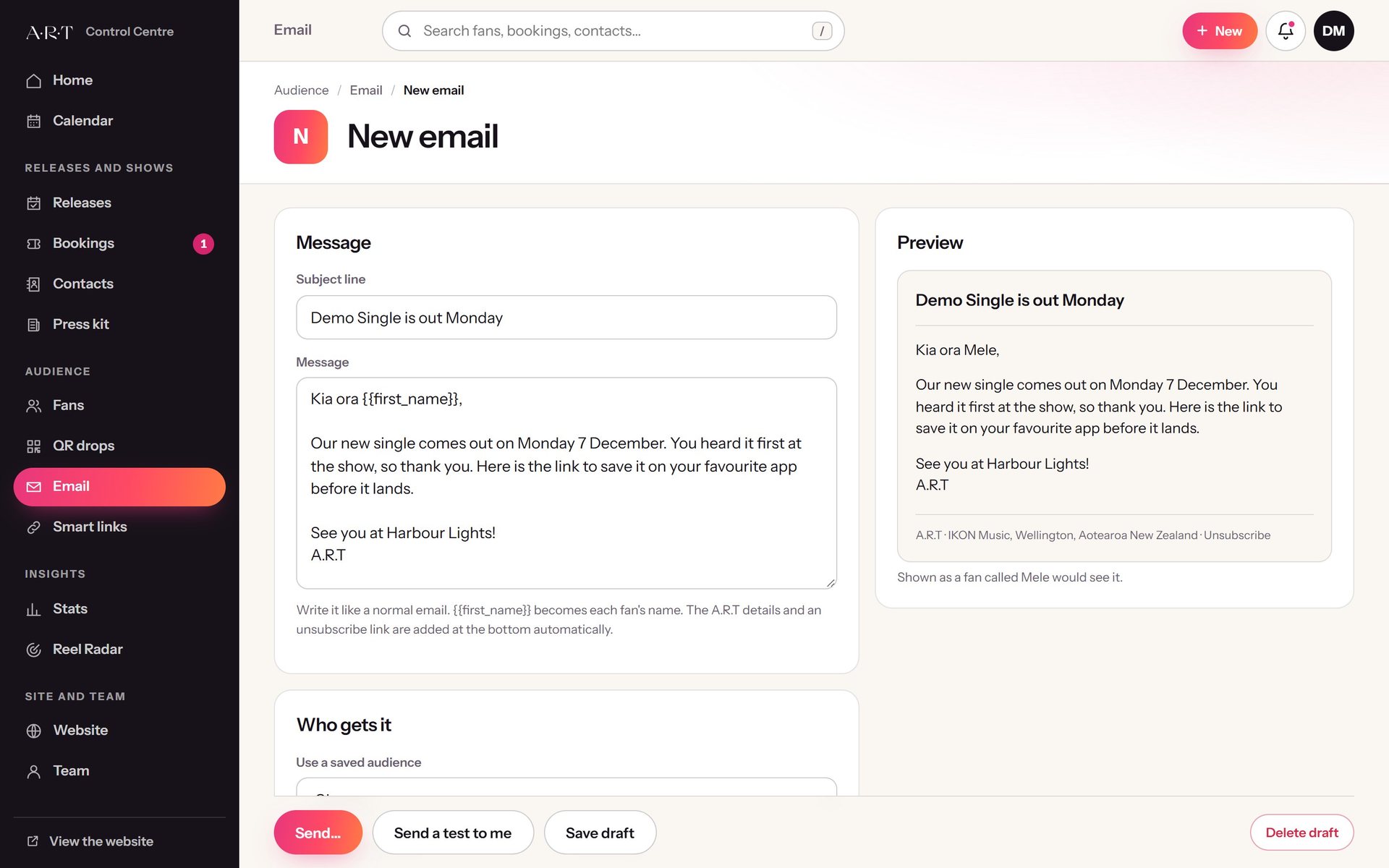
Emails the fans actually get
Release emails to the people who opted in, with AI writing the first draft and the captions for social. The team edits and sends.
Why: a social post reaches whoever the algorithm picks. An email reaches the fan.
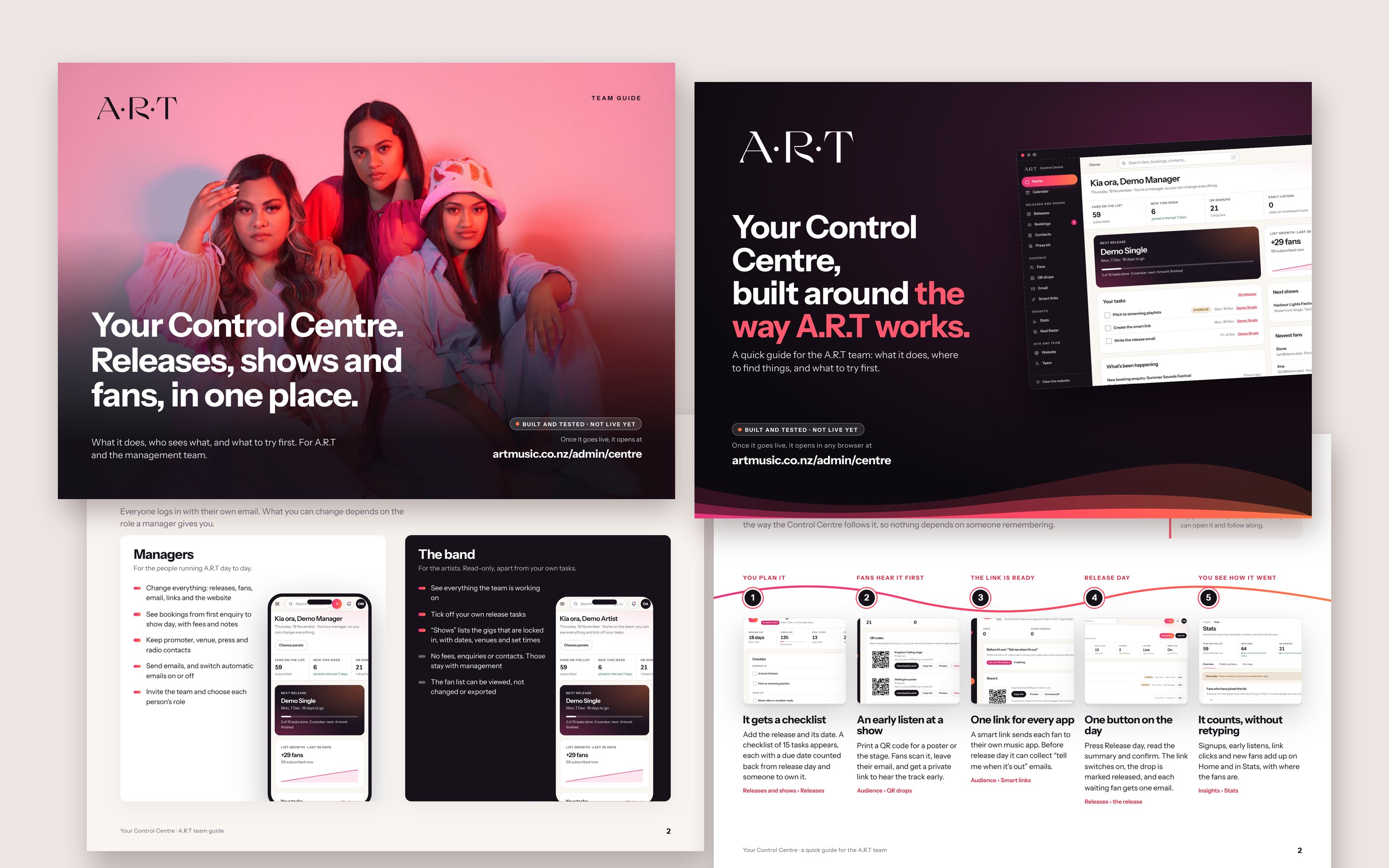
A guide for the band and one for management
A team guide that shows who sees what, from managers to the band, and a staff guide that follows one made-up single from plan to release day. Both end with five things to try, on a practice copy where nothing can break.
Why: a control centre only helps if everyone feels confident opening it.
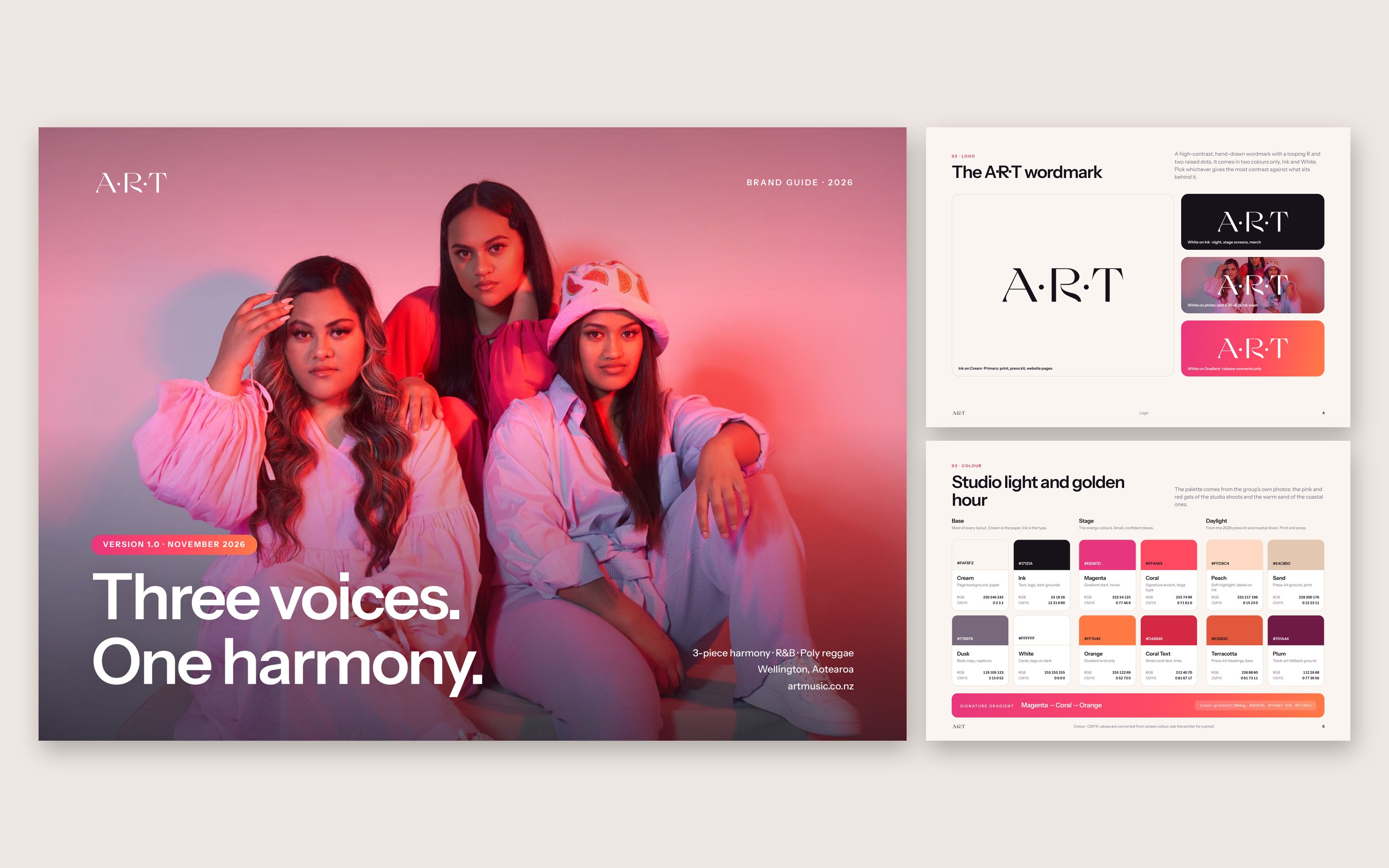
A brand guide: "Three voices. One harmony."
Fourteen pages on how A.R.T looks and sounds everywhere: the wordmark and how not to use it, a palette taken from studio light and golden hour, one typeface family, how to shoot and choose photos of the three of them, and how they sound in writing.
Why: the band, their management and every designer they work with now pull in the same direction.
Live, and keeping up on its own.
If this sounds like your business.
You don't have to be a band for any of this to apply.