A template he'd outgrown.
Manchoo's packs are called Redrums: twenty RnB, throwback, reggae and party tracks per volume, each re-edited so it drops straight into a set. DJs buy them to play out. He'd built a real following doing it.
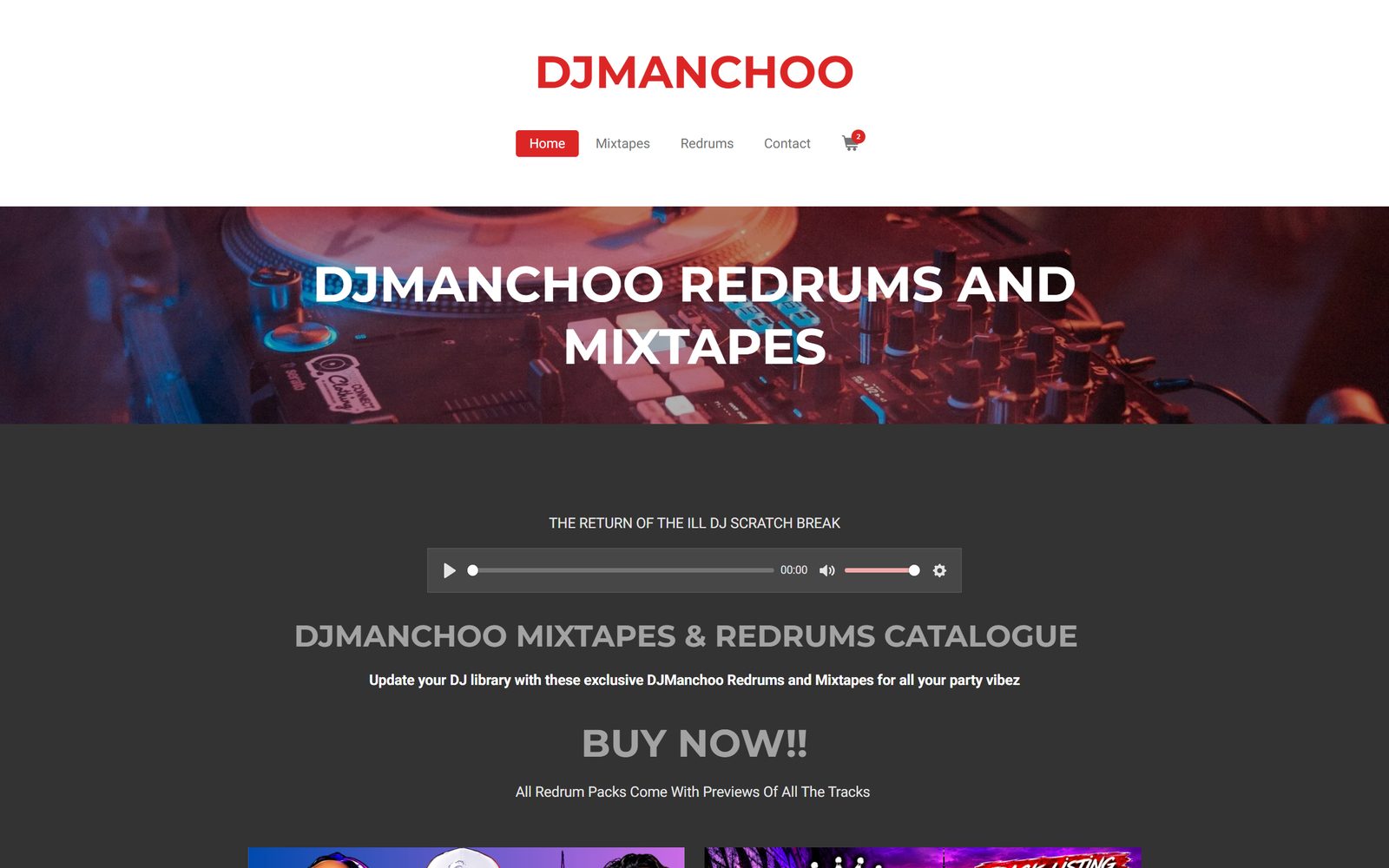
Like most people starting out, he'd set up his site on a website builder, and it got him selling. But his covers are loud, neon and unmistakable, and a template couldn't keep up with them: a stock photo up top, a preview heading still waiting for its player, and bookings through an email link.
When we looked under the hood together, we found something nobody had told him: the free audio host behind his previews meant his tracks could be played in full without buying them.
His tracks deserved better protection than a template could give them.
And with the site builder's price about to quadruple in February, it was the right time to move.
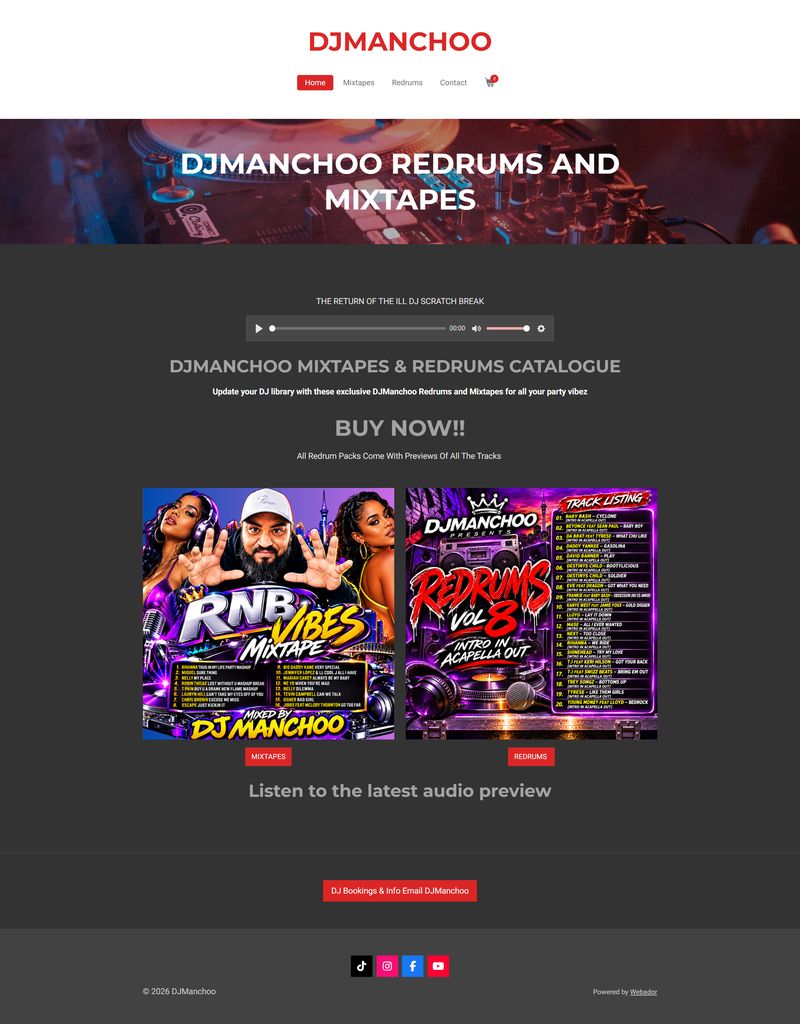
The old site, top to bottom. Scroll inside the frame.
Five things, in his words and ours.
- Look like himThe site should feel like his covers, without changing a logo his fans already know.
- Stop the leaksPaid tracks should only reach people who paid for them.
- Run it himselfUpload a new pack from his phone, without asking anyone.
- Know his buyersSee what's selling, and tell buyers when a new volume lands.
- Stop rentingGet off a site builder that was about to cost four times as much.
A record store that also takes bookings.
Most DJ websites lead with bookings. Manchoo's business is his packs, so together we flipped it: the site is a record store first, and bookings sit underneath.
- Custom, not a store template
We looked at Shopify first. A player that keeps playing while you browse, previews that start where DJs want to hear them, and protected downloads would all have meant fighting a template. Building it ourselves was cleaner, and cheaper to run.
- Find the brand he already had
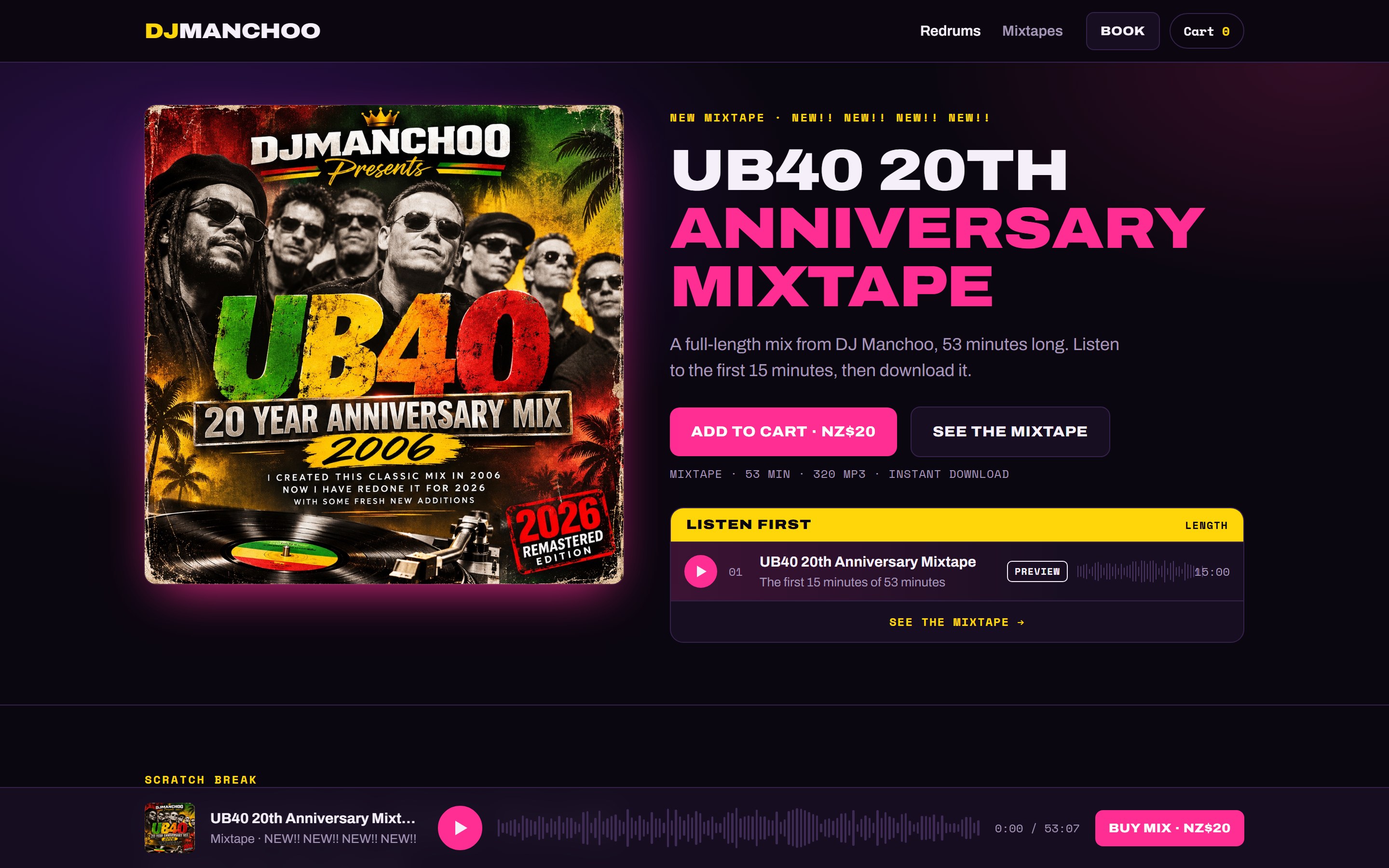
He was modest about his brand. He had more of one than he thought. His covers already use neon magenta, purple and yellow on black, so the site became a quiet black frame that lets them be loud. The yellow track list printed on his covers became the live track list on every pack page.
- Keep the logo familiar
We kept his thick lettering and only changed the colours: DJ in yellow, Manchoo in white. Recognisable to his fans, and finally consistent everywhere.
- Show it before building it
A clickable mock-up with his real covers, real prices and real previews, so we made every decision together, on something he could see.
- Design the protection
Private storage, download links that expire after five minutes, a limit on downloads, and every file stamped with the order it came from. We were straight with him: nothing stops someone sharing a file once it's on their computer, but now every copy can be traced back to a sale.
- Leave out what would cost sales
No customer accounts, because passwords lose sales; buyers get a personal link instead. No phone app, because it would have added cost without adding anything.
Everything a record store needs, and nothing it doesn't.
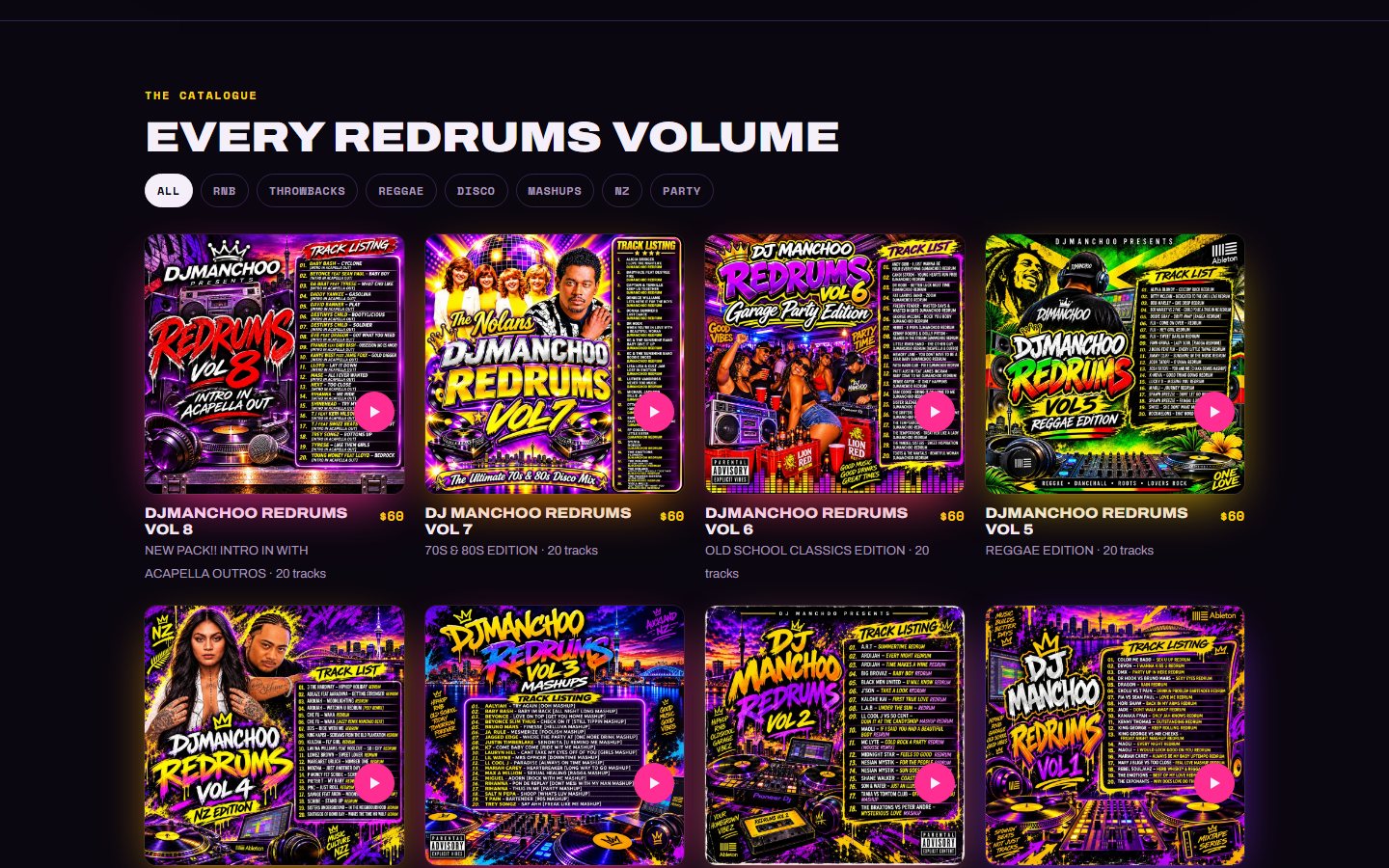
A storefront built around the covers
Every volume up front, filtered by style, with a player that keeps going while you browse. Previews start at the intro, ninety seconds in, because that's the part a DJ wants to hear.
Why: DJs buy with their ears. The faster they hear the drop, the faster they buy.
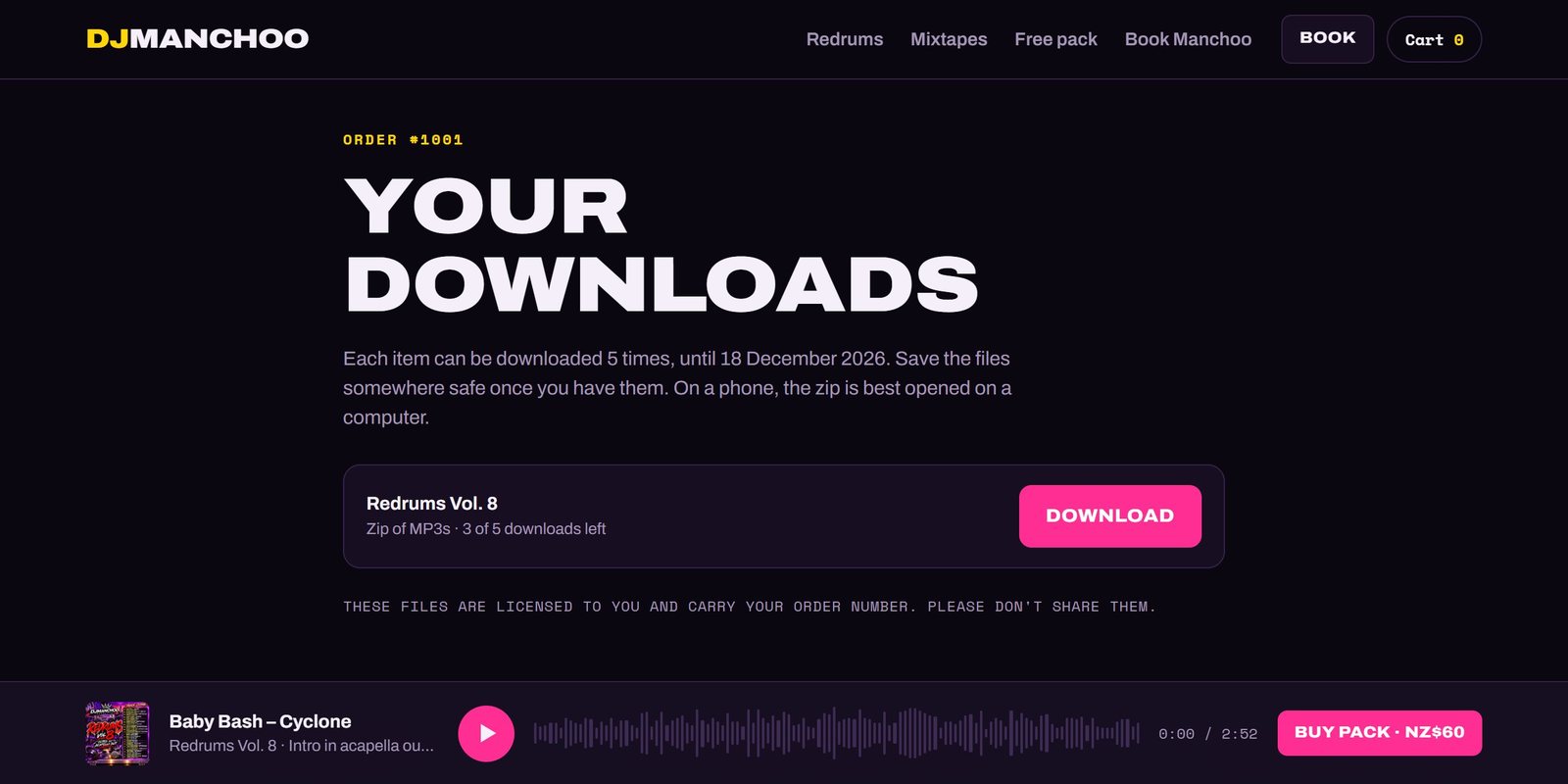
Downloads only for people who paid
Card, Apple Pay or Google Pay at checkout. Each order gets its own pack, stamped with its order number, behind a link that expires in minutes and can only be used a few times.
Why: his packs are his income, so they're worth protecting.
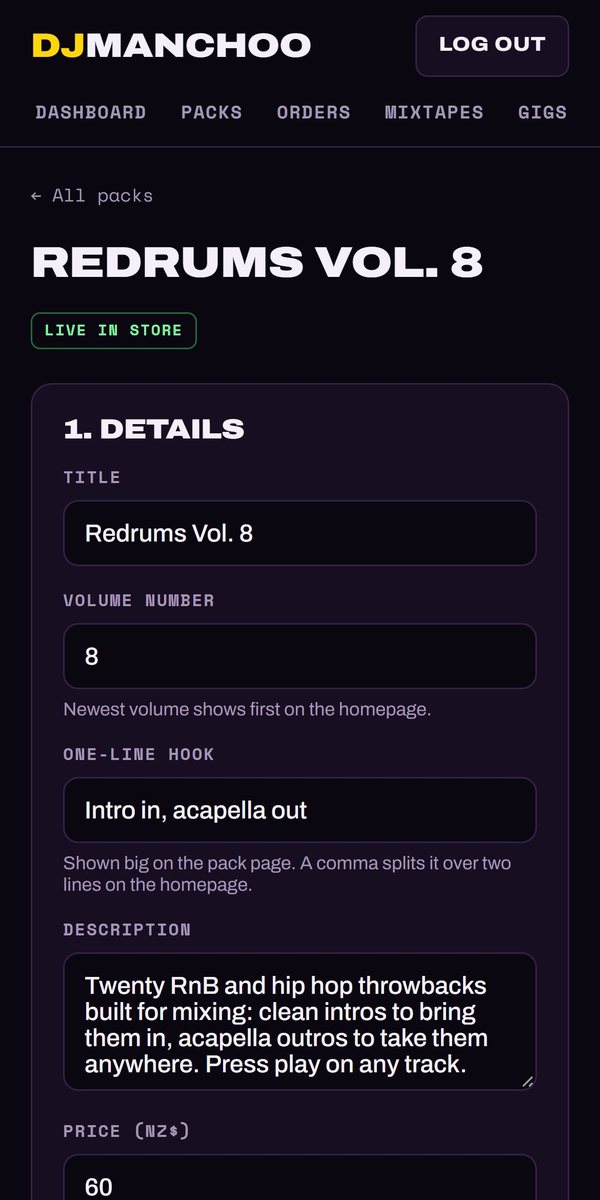
A new pack, from his phone
He drops in the MP3s and the site reads the track names, works out the lengths and cuts the previews. If the signal drops mid-upload, it picks up where it left off. Then one switch puts it live.
Why: he wanted to run it himself, and nobody should need to be technical to sell their own music.
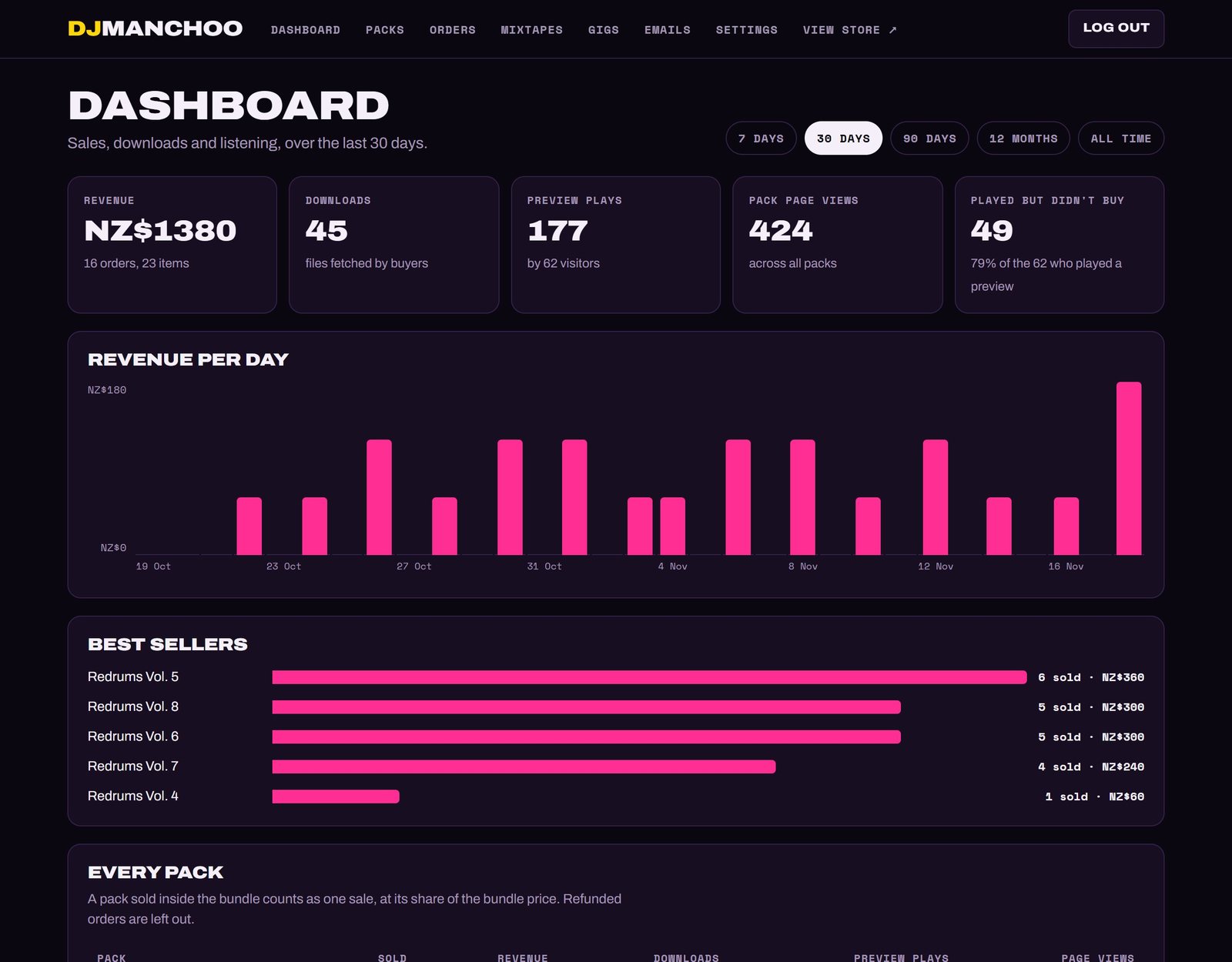
A dashboard that answers his questions
Sales, downloads and listening for any period, the best sellers, and one number most stores never show: how many people played a preview but didn't buy. No cookies and no third-party trackers.
Why: knowing which pack people almost bought tells him what to make next.
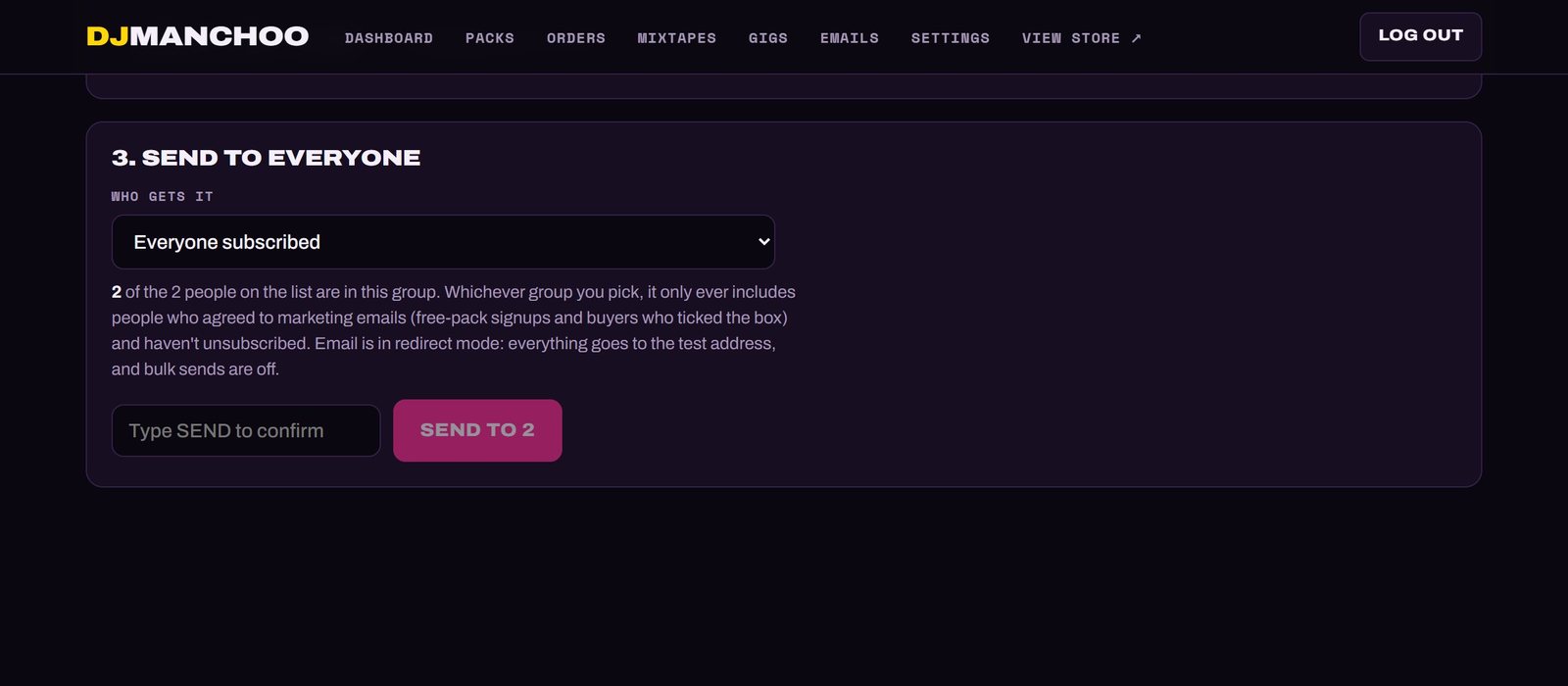
Release emails to the right people
When a new volume drops he can email everyone, buyers of one pack, or buyers who've gone quiet for six months. Only people who agreed to hear from him. In the cart, buyers are offered the volumes they don't own yet at a bundle discount.
Why: his buyers are his business. Now he owns that list.
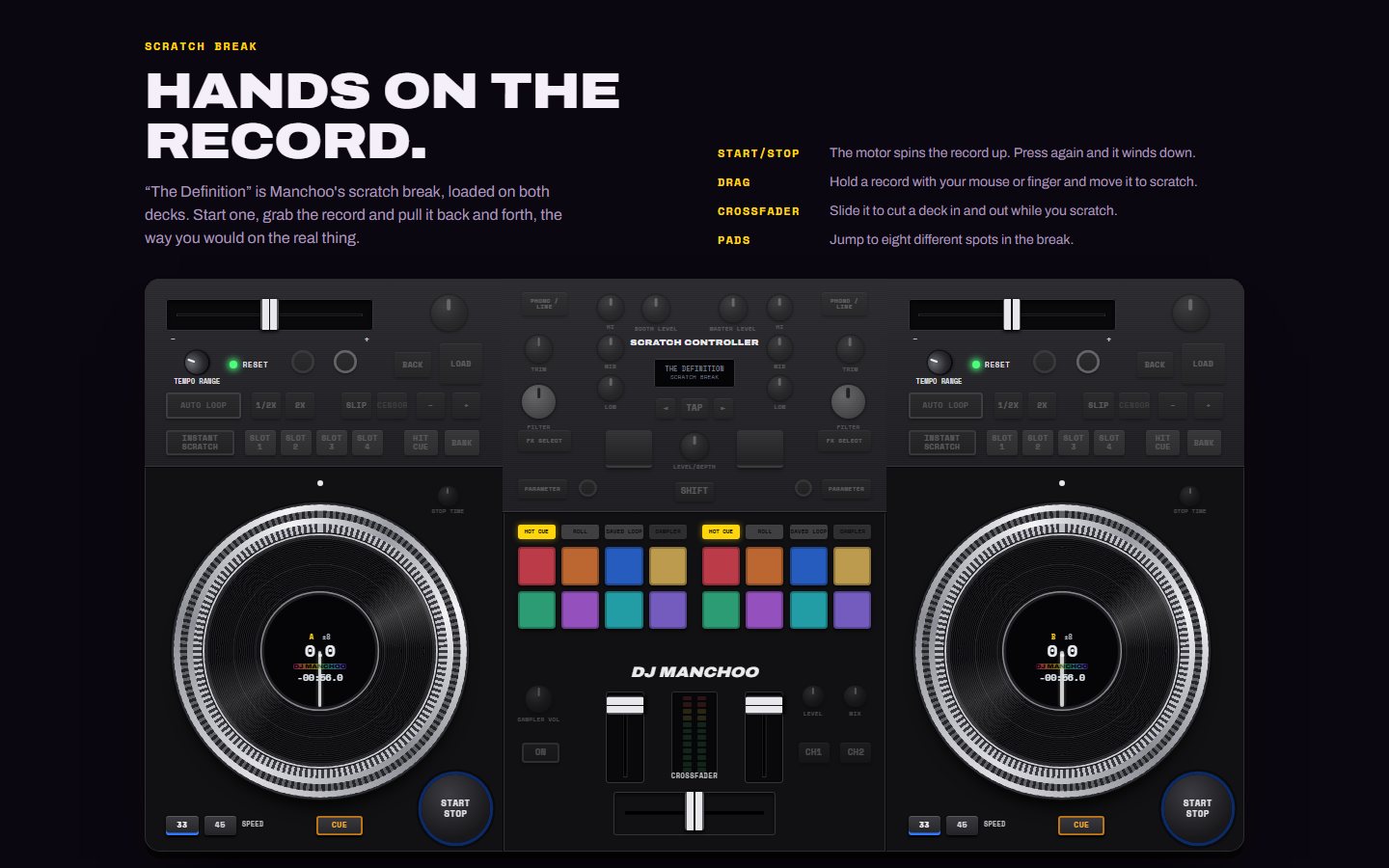
And one thing just for fun
He wanted his scratch break on the site. So we built a two-deck controller in the browser, laid out like the one he plays on. Grab the record and scratch it yourself.
Why: a store sells packs. This sells him.
Live, and his.
Next: moving his domain off the old site builder before its price goes up.
If this sounds like your business.
Most businesses start where Manchoo did. Here's what changed.